
Fire Accidents in the UK: A Growing Concern and Lessons Learned
The UK has faced a series of devastating fires in recent years, underscoring urgent safety challenges ranging from lithium battery hazards to climate-driven wildfires. Below, we explore key incidents, emerging risks, and critical lessons for the future.
1. The Rising Threat of E-Bike and E-Scooter Fires
Lithium battery fires linked to e-bikes and e-scooters have surged in London, with two fatal incidents occurring ‘’less than 24 hours apart’’ in early February 2025. In West Hampstead, a charging e-scooter ignited, gutting a home and killing a dog. Hours later, a converted e-bike battery exploded in Feltham, destroying another property and claiming a third dog’s life. Both cases involved catastrophic battery failures, highlighting risks tied to second-hand or modified devices purchased online.
Key Statistics:
- ‘’142 e-bike fires’’ and ‘’29 e-scooter fires’’ recorded in London in 2024 alone.
- ‘’3 deaths’’ and over ‘’100 injuries’’ linked to e-bike battery failures since 2023.
- The London Fire Brigade’s ‘’Charge Safe’’ campaign urges users to avoid non-certified chargers and prioritise safety over cost savings.
2. Grenfell Tower: A Legacy of Tragedy
The 2017 Grenfell Tower fire, which killed 72 people, remains a stark reminder of systemic safety failures. Nearly eight years later, the government announced plans to demolish the tower’s remains, citing structural instability. Survivors and families remain divided: some demand the tower stand as a memorial, while others acknowledge demolition as unavoidable.
Ongoing Concerns:
- Prosecutions related to the disaster may not begin until 2027.
- The tragedy exposed flaws in building regulations, particularly ‘’flammable cladding’’, which resurfaced in a 2024 Dagenham tower block fire.
3. Climate Change and Wildfires
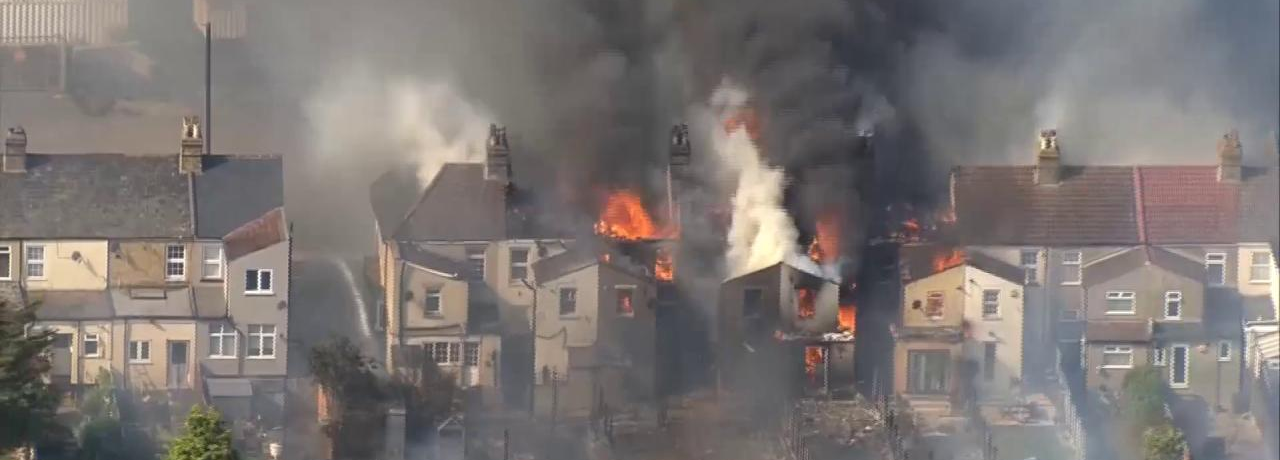
The ‘’2022 heatwave’’, which saw temperatures hit ‘’40.3°C (104.5°F)’’, triggered unprecedented wildfires. In Wennington, east London, flames engulfed homes and fields, described by firefighters as “absolute hell”. Over 1,600 emergency calls flooded London’s fire service daily—five times the usual volume.
Lessons Learned:
- The UK’s ‘’Wildfire Resilience Framework’’ (2025) now emphasises property protection, drawing on U.S. and Canadian strategies.
- Challenges persist, including funding gaps and public complacency.
4. Building Safety and Cladding Risks
Despite post-Grenfell reforms, dangerous cladding remains a threat. A 2024 fire in Dagenham’s tower block, where cladding removal was underway, forced 80 evacuations and hospitalised two residents. Investigators are probing whether cladding played a role.
5. Everyday Hazards: Electrical Fires
Not all fires stem from high-profile causes. A January 2025 house fire in Barnet, caused by an ‘’attic electrical fault’’, destroyed the roof and first floor. Fortunately, no injuries occurred, but the incident highlights the ageing infrastructure risk.
- Moving Forward: Safety Recommendations
- E-Bike/E-Scooter Users: Use certified chargers and avoid modifying batteries.
- Purchase from reputable retailers, not online marketplaces.
2. Homeowners:
- Install smoke alarms and check electrical systems regularly.
3. Communities:
- Advocate for stricter building regulations and wildfire preparedness plans.
Conclusion:
From lithium batteries to climate extremes, fire risks in the UK demand proactive measures. While tragedies like Grenfell and Wennington have spurred reforms, vigilance and public education remain critical.